
Na 1244.yt rozwijam swoje zainteresowania duchowością, filozofią, historią katarów, religiami, mitami i teoriami, które próbują objaśnić świat. Pociągają mnie tajemnice oraz pytania sięgające dalej niż pierwsza, najwygodniejsza odpowiedź. Dawniej przede wszystkim jako dziennikarz, dziś jako psycholog, mam świadomość, jak złożone, a czasem kontrowersyjne są tematy, które tutaj podejmuję. Stawianie głębokich pytań, zdobywanie wiedzy i sprawdzanie, czy odpowiedzi wytrzymują próbę faktów, jest dla mnie inspirującą przygodą umysłu.
Nie przedstawiam tu osobistego wyznania wiary ani deklaracji światopoglądowej. Oddaję czytelnikom to, co wnoszę z dziennikarstwa i psychologii: uważność, umiejętność zadawania pytań oraz gotowość do sprawdzania własnych wniosków. Nie każde przypuszczenie znajduje potwierdzenie. Także wtedy droga poszukiwania jest dla mnie ważna, bo pomaga lepiej zrozumieć granice tego, co wiem.
Zapraszam Cię do tej rozmowy. Zadaj pytanie w komentarzu, podsuń temat na erben.pl@gmail.com albo napisz do mnie na WhatsApp, pod numer +48 790 404 404. Twoje pytanie może stać się początkiem mojego kolejnego tekstu.
Czy Antoine de Saint-Exupéry ukrył Graala w opowieści o Małym Księciu, a klucz do niej pozostawił w Róży? Nie znalazłem dokumentu potwierdzającego taki zamiar ani jego spotkanie z Ottonem Rahnem, poszukiwaczem katarskich tajemnic związanym z SS. Znalazłem jednak powód, żeby potraktować to pytanie poważnie jako zaproszenie do lektury, a następnie sprawdzić, gdzie kończy się historia i zaczyna interpretacja.
Punktem wyjścia jest niezwykłe zestawienie. Montségur, zagłada jego religijnej wspólnoty, Graal, III Rzesza i książka, którą czyta się dzieciom. Między nimi Róża: delikatna, wymagająca, pozostawiona daleko od bohatera. Gdy połączyć te elementy, powstaje niemal gotowy scenariusz o sekrecie przenoszonym przez stulecia.
Postanowiłem sprawdzić kolejność zdarzeń, pochodzenie skojarzeń i sam tekst. Chciałem wiedzieć, czy odnajdę rzeczywisty ślad przekazu, czy raczej zobaczę, jak z kilku prawdziwych szczegółów powstaje opowieść, której całości nikt jeszcze nie udowodnił.
Stos, który nie wyjaśnia wszystkiego
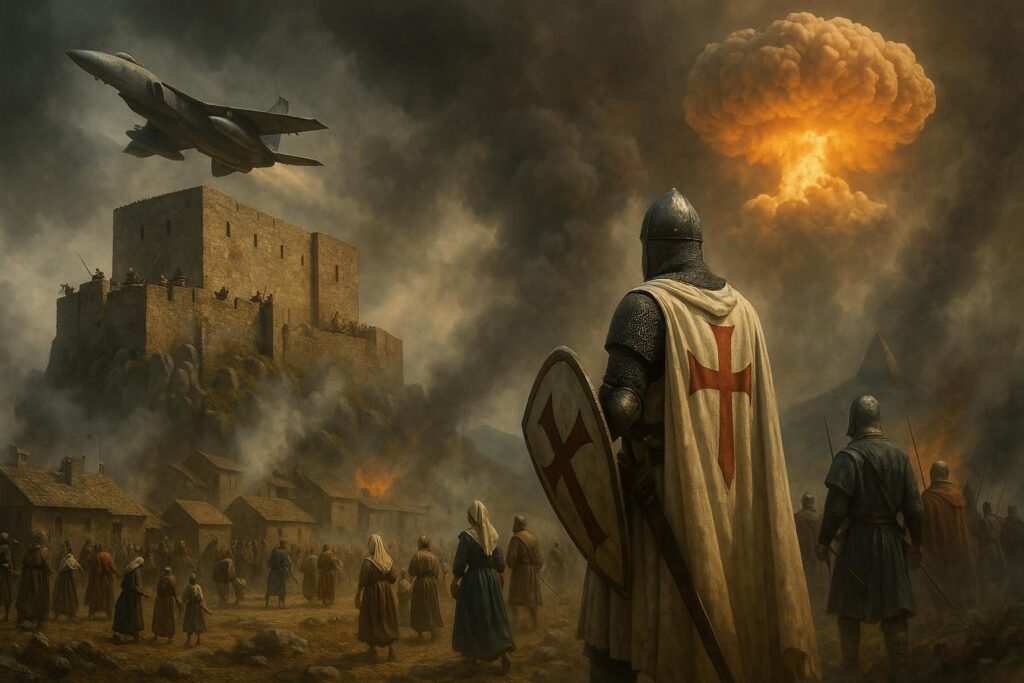
Zacząłem od 16 marca 1244 roku. Po kapitulacji Montségur spalono ponad dwieście osób odmawiających wyrzeczenia się wiary. Oblężeniem dowodził Hugues des Arcis, królewski seneszal. Określenie „rycerze papieża” upraszcza więc układ odpowiedzialności, choć religijnego charakteru prześladowania nie sposób pominąć. Dzisiejszy zamek jest przy tym późniejszą budowlą, powstałą po upadku katarskiego ośrodka. Opis oblężenia Montségur.
Ten ostatni szczegół zatrzymał mnie na dłużej. Gdy patrzę na fotografię ruin, łatwo wyobrazić sobie, że oglądam dokładnie te same mury, za którymi skrywano relikwię. Tymczasem nawet kamień wymaga sprawdzenia daty. Inaczej zaczynam od autentycznej fotografii, a kończę przy nieautentycznej rekonstrukcji.
Podobnej ostrożności wymaga zdanie, że w 1244 roku „unicestwiono katarów”. Opis konkretnej egzekucji nie wystarcza do wyznaczenia kresu całej tradycji. Jeszcze większy przeskok następuje wtedy, gdy do zbrodni dopisuję jej rzekomy cel: zdobycie Graala.
Nie znalazłem w sprawdzonym materiale potwierdzenia, że zwycięzcy zabrali z Montségur taki przedmiot. Historyczne wydarzenie i opowieść o jego ukrytej przyczynie pozostają odrębnymi twierdzeniami.
Nie chcę przy tym, żeby ludzie zamordowani za swoją wiarę stali się jedynie efektowną dekoracją historii o skarbie. Ich śmierć ma znaczenie także wtedy, gdy żadnego Graala tam nie było.
Rahn szukał czegoś więcej niż ruin
Otto Rahn prowadził poszukiwania na południu Francji na początku lat trzydziestych. Łączył katarów z literacką tradycją Graala, korzystając między innymi z kontaktu z Antoninem Gadalem. Zainteresował swoimi pracami Heinricha Himmlera, a w 1936 roku został członkiem SS. Zmarł w 1939 roku. Ten biograficzny związek z III Rzeszą jest rzeczywisty. Biografia Ottona Rahna.
W tym miejscu łatwo ulec dramaturgii. Skoro nazistowski przywódca interesował się poszukiwaniem, można odnieść wrażenie, że musiała za nim stać niezwykła wiedza. Ja widzę tu jednak pytanie o motywację patrona, nie gotową odpowiedź na pytanie o istnienie relikwii.
Potęga instytucji nie zwiększa wiarygodności wspieranej przez nią legendy. Finansowanie wyprawy nie zamienia literackiego podobieństwa w odkrycie. Jednocześnie przynależność Rahna do SS nie jest logicznym dowodem fałszywości każdego jego zdania. Twierdzenia trzeba oceniać na podstawie materiału, a ideologiczne uwikłanie opisać bez przemilczeń.
Badacze Montségur, Laure Barthet i Michel Sabatier, wskazują rolę Rahna w utrwalaniu związku miejsca z poszukiwaniem Graala. To ważna zmiana perspektywy: zamiast pytać wyłącznie, co ukrywali średniowieczni mieszkańcy, zaczynam pytać, co późniejsi autorzy dopisali do ich historii. Barthet i Sabatier, 2019.
Rahn staje się wówczas bohaterem dziejów pewnej interpretacji. To nadal fascynująca rola. Nie muszę przyznawać mu racji, żeby chcieć zrozumieć siłę jego opowieści.
Dwie biografie i brakujący most
Najbardziej filmowy fragment hipotezy przedstawia dwóch ludzi niemal obok siebie. Jeden przemierza katarską krainę, drugi ogląda ją z samolotu. Ich drogi mogłyby przeciąć się w rozmowie, której późniejszym owocem zostałaby książka.
Tyle że „Mały Książę” powstawał w Ameryce, przede wszystkim w 1942 roku, i został wydany w Nowym Jorku w 1943 roku. Opowieść o jego pisaniu podczas równoczesnych poszukiwań Rahna w Langwedocji nie odpowiada chronologii. Historia powstania „Małego Księcia”.
Nie wynika z tego, że obaj mężczyźni nigdy wcześniej nie mogli się spotkać. Wynika coś węższego: do potwierdzenia wcześniejszego spotkania potrzebuję osobnego świadectwa. W materiałach wykorzystanych do tego tekstu go nie znalazłem.
List, dziennik, datowane wspomnienie czy wiarygodna relacja świadka mogłyby zmienić ocenę. Nawet wtedy pozostałyby kolejne pytania. Czy rozmawiali o Graalu? Czy Saint-Exupéry znał pisma Rahna? Czy wykorzystał je w tej konkretnej książce?
Każde przejście wymaga dowodu. Znajomość nie oznacza wpływu, wpływ nie oznacza przejęcia doktryny, a przejęcie motywu nie oznacza zaszyfrowania wiadomości.
To właśnie tutaj przebiega granica między hipotezą wartą sprawdzania a opowieścią, która sama dostarcza sobie brakujących ogniw. Nie zamykam archiwów stwierdzeniem „niemożliwe”. Nie wpisuję też do nich spotkania tylko dlatego, że byłoby literacko znakomite.
Graal nie zawsze był kielichem
Pytanie o Różę okazuje się ciekawsze, kiedy przestaję traktować Graala jak przedmiot o jednym ustalonym wyglądzie. W średniowiecznej literaturze jego postać się zmieniała. U Chrétiena de Troyes pojawia się naczynie, natomiast w „Parzivalu” Wolframa von Eschenbacha Graal ma postać kamienia. Historię tych przekształceń omawia Leah Tether w opracowaniu poświęconym rozpowszechnianiu tekstów graalowych. Tether, „The Holy Grail”.
Ta różnorodność pozwala pytać o funkcję symbolu. Co sprawia, że poszukiwany przedmiot staje się ważniejszy od innych? Czy chodzi o jego moc, pochodzenie, obietnicę ocalenia, a może o zmianę, którą wywołuje samo poszukiwanie?
Nie wyprowadzam stąd wniosku, że dowolny kwiat może być historycznym Graalem. Dostrzegam natomiast możliwość porównania dwóch opowieści bez twierdzenia, że jedna musiała powstać z drugiej.
Podobieństwo znaczeń nie jest jeszcze dowodem przekazania sekretu.
To rozróżnienie pozwala mi zachować ciekawość. Mogę zapytać, czy Róża jest Graalem Małego Księcia, pod warunkiem że uczciwie nazwę rodzaj pytania. Historyk szuka świadectwa wpływu. Czytelnik może badać analogię. Obaj mają prawo do poszukiwań, lecz nie przedstawiają tego samego rodzaju odpowiedzi.
Róża, której wartość trzeba rozpoznać
W rozdziałach XX i XXI spotkanie ogrodu róż oraz rozmowa z lisem zmieniają rozumienie wyjątkowości kwiatu. Znaczenie ma więź, wspólny czas i troska. W rozdziałach VIII i IX relacja z Różą okazuje się również trudna, pełna nieporozumień. To konkretne miejsca tekstu, od których zaczynam proponowaną lekturę. Saint-Exupéry, „Le Petit Prince”.
Rozwijam tutaj możliwość postawioną w pytaniu do artykułu: Róża jako osobisty Graal bohatera. Nie przypisuję tego rozpoznania samemu pisarzowi.
W takim odczytaniu podróż służy odkryciu wartości czegoś, co było blisko. Zmienia się poszukujący, dlatego inaczej widzi cel. Nie potrzebuję do tego podziemnej komnaty ani bractwa strażników. Wystarcza problem znacznie bardziej niewygodny: można przebywać przy czymś ważnym i jeszcze nie umieć tego rozpoznać.
Najmocniejszy dostępny trop biograficzny prowadzi do Consuelo. Oficjalny serwis poświęcony Saint-Exupéry’emu wskazuje jego żonę jako inspirację dla Róży. „Consuelo, son épouse”.
Nie uważam, żeby biografia wyczerpywała znaczenie literatury. Symbol może wyrastać z konkretnej relacji i przekraczać jej granice. Nie potrzebuje jednak tajnego rodowodu, żeby być głęboki.
Najsilniejszy zarzut wobec mojej propozycji brzmi inaczej: jeżeli „Graalem” nazwę wszystko, co ważne, porównanie przestaje cokolwiek wyjaśniać. Dlatego ograniczam je do jednego punktu. Interesuje mnie przemiana sposobu rozpoznawania wartości. Nie twierdzę, że każdy szczegół obu tradycji do siebie pasuje.
Róża w oknie nie jest planem katedry
Pozostaje jeszcze trop templariuszy. Miałaby go podpowiadać róża, według której budowano francuskie katedry. Zanim pójdę dalej, muszę ustalić, o czym właściwie mowa.
Rozeta, czyli koliste okno z dekoracyjnym podziałem, rzeczywiście występuje w gotyckiej architekturze, między innymi w katedrach francuskich. To jednak element budowli. Nie jest automatycznie jej rzutem ani dowodem istnienia wspólnego planu całej sieci świątyń. Charakterystyka gotyckich rozet.
Widzę tu trzy możliwe twierdzenia. Pierwsze dotyczy kształtu okna. Drugie geometrii pojedynczego budynku. Trzecie rozmieszczenia wielu budowli na mapie. Dopiero po ich rozdzieleniu mogę pytać, co dokładnie przypisuje się templariuszom.
Potrzebowałbym listy katedr, jasnej definicji wzoru i materiałów dokumentujących udział zakonu. Przy wzorze geograficznym ważne byłoby również, dlaczego wybrano właśnie te miejsca, a pominięto inne. Kształt odnaleziony po dobraniu punktów do oczekiwanego obrazu może być dziełem interpretatora.
W tej kwerendzie nie znalazłem wiarygodnego potwierdzenia ogólnej tezy o templariuszowskim „planie róży”. Tym bardziej nie znalazłem podstaw do połączenia go z zamiarem Saint-Exupéry’ego.
Kwiat, okno i mapa mogą tworzyć piękne zestawienie. Żeby stały się historycznym argumentem, potrzebują czegoś więcej niż wspólnej nazwy.
Gdyby jednak istniał szyfr
Pozwalam sobie teraz na jawny eksperyment myślowy. Załóżmy, że odnaleziono autentyczny, datowany list Saint-Exupéry’ego, w którym pisarz wiąże Różę z katarską interpretacją Graala.
Zmieniłoby to trzy rzeczy. Hipoteza o świadomym nawiązaniu zyskałaby podstawę. Pojawiłby się powód, żeby ponownie porównać odpowiednie fragmenty książki z lekturami autora. Można byłoby również szukać śladów tej decyzji w szkicach, korespondencji i kolejnych wersjach tekstu.
Nie dowodziłoby to jednak, że katarzy rzeczywiście przechowywali Graala. Autor może celowo wykorzystać legendę, która nie opisuje prawdziwego wydarzenia. Dokument o intencji pisarza rozstrzygałby pytanie o literaturę, nie o zawartość średniowiecznego skarbca.
Czy może więc istnieć coś, czego dziś nie potrafię rozstrzygnąć? Tak: nieznany materiał mógłby zmienić ocenę wpływów i kontaktów. Nie czyni to wszystkich wersji równie prawdopodobnymi. Opowieści sprzecznej z chronologią nie ratuje ogólne stwierdzenie, że „wszystko jest możliwe”.
A „gra światów”, która nie pozwala poznać prawdy? Jako metafora opisuje doświadczenie poznawczego niedosytu. Jako wyjaśnienie historyczne wymagałaby wskazania czegoś, co odróżnia ją od zwykłej utraty dokumentów, niepełnej kwerendy lub błędnego skojarzenia. Jeśli każde znalezisko i każdy jego brak potwierdzają tę samą teorię, nie wiem już, jak ją sprawdzić.
Sekret, którego nie trzeba wykraść
Na końcu tej drogi potrafię oddzielić trzy poziomy. Są wydarzenia i biografie. Są późniejsze opowieści łączące katarów z Graalem. Jest wreszcie lektura Róży jako symbolu wartości rozpoznanej dzięki podróży.
Nie znalazłem dowodu łączącego te poziomy w jeden historyczny przekaz. Nie potwierdziłem spotkania Rahna ze Saint-Exupérym, wykradzenia Graala z Montségur ani templariuszowskiego klucza do „Małego Księcia”. Dalszego sprawdzania wymagałoby przede wszystkim pochodzenie opowieści o znajomości obu mężczyzn.
Zachowuję jednak możliwość interpretacji, od której zaczęło się pytanie. Róża może być osobistym Graalem w proponowanej lekturze. Wtedy tajemnica dotyczy zdolności rozpoznawania znaczenia, a nie posiadania wiedzy dostępnej wybranym.
Dla mnie to zakończenie nie odbiera historii siły. Przesuwa ciężar z ukrytego przedmiotu na odpowiedzialność patrzącego. Łatwo zachwycić się skarbem, którego nikt nie widział. Trudniej zauważyć wartość czegoś, co codziennie wystawia na próbę cierpliwość i uwagę.
A jeśli najważniejszy Graal to właśnie to, czego znaczenie potrafię rozpoznać dopiero wtedy, gdy przestaję szukać wyłącznie daleko?
Robert J Błaszczyk
Dziennikarz · psycholog · psychotraumatolog · autor 1244.yt
Wywodzę się z dziennikarstwa, dziś pracuję jako psycholog i tworzę 1244.yt. Piszę o historii idei, duchowości, katarach, tradycjach Graala i pytaniach o naturę rzeczywistości. Interesuje mnie zarówno treść dawnych przekonań, jak i to, dlaczego człowiek szuka w nich znaczenia. Łączę ciekawość dziennikarską z wiedzą psychologiczną, oddzielając źródła, interpretacje i osobistą refleksję.
Prowadzę konsultacje psychologiczne i psychotraumatologiczne online. Pomagam uporządkować trudności związane ze stresem, przeciążeniem emocjonalnym, relacjami i następstwami trudnych doświadczeń oraz ustalić możliwe kolejne kroki.
W pracy wykorzystuję psychoedukację, analizę funkcjonalną zachowania, dialog motywacyjny oraz elementy podejścia poznawczo-behawioralnego i skoncentrowanego na rozwiązaniach. Dobieram sposób pracy do sytuacji, potrzeb i celu konsultacji.
Łączę przygotowanie psychologiczne i psychotraumatologiczne, obejmujące suicydologię, z doświadczeniem dziennikarza, coacha, wykładowcy i eksperta komunikacji. Na Psycholog.CLICK przekładam wiedzę psychologiczną na zrozumiałe artykuły i praktyczne wskazówki.
Nie musisz mieć gotowej nazwy swojego problemu. Możemy zacząć od tego, co jest dla Ciebie trudne.
Umów konsultację w ZnanyLekarz
Napisz do mnie przez WhatsApp
Telefon kontaktowy: +48 790 404 404.
Bibliografia i źródła
- Saint-Exupéry, Antoine de. „Le Petit Prince”, 1943. Wykorzystane fragmenty rozdziałów VIII, IX, XX i XXI; francuska edycja elektroniczna Project Gutenberg Australia, udostępniona w 2003 roku, aktualizowana w 2023 roku.
- Antoine de Saint-Exupéry, oficjalny serwis poświęcony autorowi. „Consuelo, son épouse (1901–1979)”. Materiał biograficzny, bez wskazanej daty publikacji.
- Tether, Leah. „The Holy Grail”. W: „The Cambridge History of Arthurian Literature and Culture”. Cambridge University Press, publikacja internetowa 2026. Wykorzystano dostępny fragment dotyczący przemian motywu.
- Barthet, Laure; Sabatier, Michel. „Montségur : le mythe à l’épreuve de l’archéologie”. „Patrimoines du Sud”, nr 10, 2019. Wykorzystano dostępne fragmenty indeksowane; pełnego tekstu nie udało się odczytać.
- Wikipedia, wydanie francuskie. „Siège de Montségur”. Pomocnicze zestawienie chronologii i bibliografii historycznej.
- Wikipedia, wydanie angielskie. „Otto Rahn”. Pomocnicze dane biograficzne; nie wykorzystano rozbieżnej informacji o roku pierwszej publikacji książki Rahna.
- Wikipedia, wydanie angielskie. „The Little Prince”. Pomocnicze zestawienie historii powstania i publikacji utworu.
- Wikipedia, wydanie angielskie. „French Gothic stained glass windows”. Pomocnicza identyfikacja rozet jako elementu architektury.
Dostęp do materiałów internetowych: 17 września 2026 roku.
The Little Prince and the Grail’s Shadow
On 1244.yt, I explore my interests in spirituality, philosophy, the history of the Cathars, religions, myths and theories that seek to explain the world. I am drawn to mysteries and to questions that reach beyond the first, most convenient answer. Formerly working primarily as a journalist, and now as a psychologist, I recognise how complex, and sometimes controversial, the subjects I address here can be. Asking deeper questions, acquiring knowledge and testing whether answers withstand factual scrutiny is an inspiring intellectual adventure for me.
This is neither a personal profession of faith nor a declaration of a worldview. I offer readers what I bring from journalism and psychology: attentiveness, the ability to ask questions and a willingness to examine my own conclusions. Not every conjecture finds support. Even then, the search matters to me because it helps me understand the limits of what I know.
I invite you to join the conversation. Leave a question in the comments, suggest a subject at erben.pl@gmail.com, or contact me on WhatsApp at +48 790 404 404. Your question could become the starting point for my next article.
Did Antoine de Saint-Exupéry conceal the Grail in the story of the Little Prince, leaving its key in the Rose? I found no document confirming such an intention or a meeting with Otto Rahn, the seeker of Cathar mysteries who became associated with the SS. I did, however, find a reason to take the question seriously as an invitation to read, and then to examine where history ends and interpretation begins.
The starting point is an extraordinary combination: Montségur, the destruction of its religious community, the Grail, the Third Reich and a book read to children. Between them stands the Rose: delicate, demanding and left far behind by the protagonist. Put these elements together and an almost complete screenplay emerges about a secret carried across the centuries.
I decided to examine the sequence of events, the origins of the associations and the text itself. I wanted to know whether I would find a genuine trace of transmission, or instead discover how several true details can form a story whose overall argument has never been established.
A pyre does not explain everything
I began with 16 March 1244. Following the surrender of Montségur, more than two hundred people who refused to renounce their faith were burned. The siege was commanded by Hugues des Arcis, a royal seneschal. Calling the attackers “the pope’s knights” therefore simplifies responsibility, although the religious character of the persecution cannot be ignored. The castle visible today is also a later structure, built after the Cathar centre fell. Account of the siege of Montségur.
That last detail made me pause. Looking at a photograph of the ruins, it is easy to imagine that I am seeing the very walls behind which a relic was hidden. Yet even stone needs to be dated. Otherwise, I begin with an authentic photograph and end with an inauthentic reconstruction.
The statement that the Cathars were “annihilated” in 1244 requires similar care. An account of a particular execution is insufficient to establish the end of an entire tradition. An even greater leap occurs when I assign a supposed purpose to the atrocity: acquiring the Grail.
I found no confirmation in the material examined that the victors took such an object from Montségur. A historical event and an account of its hidden cause remain separate claims.
I also do not want people murdered for their faith to become merely an atmospheric backdrop to a treasure story. Their deaths matter even if there was never a Grail there.
Rahn was seeking more than ruins
Otto Rahn conducted investigations in southern France in the early 1930s. He linked the Cathars with literary Grail traditions, drawing in part on his contact with Antonin Gadal. His work attracted Heinrich Himmler’s interest, and he became a member of the SS in 1936. He died in 1939. This biographical connection with the Third Reich is real. Biography of Otto Rahn.
At this point, the drama can become persuasive. If a Nazi leader took an interest in the search, it may seem that extraordinary knowledge must have been involved. I see a question about the patron’s motivation, rather than a ready answer about the existence of a relic.
An institution’s power does not make the legend it supports more credible. Funding an expedition does not turn a literary resemblance into a discovery. At the same time, Rahn’s SS membership does not logically disprove every statement he made. Claims must be assessed against evidence, while his ideological involvement must be described without concealment.
Montségur researchers Laure Barthet and Michel Sabatier identify Rahn’s role in reinforcing the association between the site and the Grail quest. This shifts the perspective: instead of asking only what medieval inhabitants concealed, I begin asking what later writers added to their history. Barthet and Sabatier, 2019.
Rahn then becomes a figure in the history of an interpretation. That remains a fascinating role. I do not have to agree with him to want to understand the power of his narrative.
Two biographies and a missing bridge
The most cinematic part of the hypothesis places two men almost side by side. One travels through Cathar country; the other observes it from an aircraft. Their paths might intersect in a conversation whose eventual outcome would be a book.
Yet The Little Prince was written in America, principally in 1942, and published in New York in 1943. The story that it was being written while Rahn was simultaneously searching Languedoc does not fit the chronology. Publication history of The Little Prince.
This does not mean the two men could never have met earlier. It means something narrower: confirming an earlier meeting requires separate evidence. I found none in the material used for this article.
A letter, diary, dated recollection or reliable eyewitness account could change that assessment. Even then, further questions would remain. Did they discuss the Grail? Did Saint-Exupéry know Rahn’s writings? Did he use them in this particular book?
Every step requires evidence. Acquaintance does not establish influence; influence does not establish the adoption of a doctrine; and adopting a motif does not establish an encoded message.
Here lies the boundary between a hypothesis worth investigating and a narrative that supplies its own missing connections. I do not close the archives by declaring “impossible”. Nor do I insert a meeting into them merely because it would make excellent literature.
The Grail was not always a cup
The question about the Rose becomes more interesting when I stop treating the Grail as an object with one established appearance. Its form changed in medieval literature. Chrétien de Troyes presents a vessel, whereas in Wolfram von Eschenbach’s Parzival the Grail is a stone. Leah Tether discusses these transformations in her study of the dissemination of Grail texts. Tether, “The Holy Grail”.
This diversity invites questions about the symbol’s function. What makes the sought object more important than other things? Is it its power, its origin, a promise of salvation, or perhaps the change brought about by the search itself?
I do not conclude that any flower can therefore be the historical Grail. I do see a possibility of comparing two stories without claiming that one must have originated in the other.
A resemblance in meaning is not yet evidence that a secret was transmitted.
This distinction allows me to remain curious. I can ask whether the Rose is the Little Prince’s Grail, provided I honestly identify the kind of question I am asking. The historian seeks evidence of influence. The reader can investigate an analogy. Both may pursue their questions, but they are not offering the same kind of answer.
The Rose whose value must be recognised
In chapters XX and XXI, the encounter with a garden of roses and the conversation with the fox change the understanding of the flower’s uniqueness. The relationship, shared time and care matter. In chapters VIII and IX, the relationship with the Rose is also difficult and marked by misunderstandings. These are the specific passages from which I begin the proposed reading. Saint-Exupéry, Le Petit Prince.
Here I develop the possibility raised in the question behind this article: the Rose as the protagonist’s personal Grail. I do not attribute that identification to the writer himself.
In this reading, the journey serves to reveal the value of something that was already close. The seeker changes and therefore sees the destination differently. I do not need an underground chamber or a brotherhood of guardians to explore this. A considerably more uncomfortable problem is enough: it is possible to live beside something important without yet knowing how to recognise it.
The strongest available biographical lead points to Consuelo. The official Saint-Exupéry website identifies the writer’s wife as the inspiration for the Rose. “Consuelo, son épouse”.
I do not believe biography exhausts literature’s meaning. A symbol can grow from a particular relationship and extend beyond it. It does not, however, need a secret lineage to be profound.
The strongest objection to my proposal is different: if I call everything important a “Grail”, the comparison ceases to explain anything. I therefore limit it to one point. I am interested in a transformation in how value is recognised. I do not claim that every detail of the two traditions corresponds.
A rose window is not a cathedral plan
The Templar connection remains. Its proposed clue is a rose according to which French cathedrals were supposedly built. Before proceeding, I need to establish what this means.
A rose window, a circular window with decorative subdivisions, is indeed a feature of Gothic architecture, including French cathedrals. It is, however, a component of a building. It is not automatically the building’s ground plan or evidence of a common design governing a network of churches. Description of Gothic rose windows.
I see three possible claims here. The first concerns a window’s shape. The second concerns the geometry of an individual building. The third concerns the arrangement of many buildings on a map. Only after separating these can I ask what precisely is being attributed to the Templars.
I would need a list of cathedrals, a clear definition of the pattern and material documenting the order’s involvement. For a geographical pattern, it would also matter why certain locations were selected while others were omitted. A shape found by choosing points to fit an anticipated image may be the interpreter’s creation.
I found no reliable confirmation in this investigation of the general claim about a Templar “rose plan”. Still less did I find grounds for connecting it with Saint-Exupéry’s intentions.
A flower, a window and a map can make a beautiful combination. Becoming a historical argument requires more than sharing a name.
Suppose there really were a code
I now allow myself an explicitly conditional thought experiment. Suppose an authentic, dated letter by Saint-Exupéry were discovered in which he connected the Rose with a Cathar interpretation of the Grail.
Three things would change. The hypothesis of a deliberate allusion would gain support. There would be grounds for comparing relevant passages of the book with the author’s reading. It would also become worthwhile to search for traces of that decision in drafts, correspondence and successive versions of the text.
It would not, however, prove that the Cathars actually possessed the Grail. An author can deliberately use a legend that describes no real event. A document about a writer’s intention would answer a literary question, not establish the contents of a medieval treasury.
Could something exist that I cannot currently resolve? Yes: unknown material could change the assessment of influences and contacts. This does not make every version equally plausible. A narrative that conflicts with chronology cannot be rescued by the general assertion that “anything is possible”.
What about a “game of worlds” that prevents the truth from being known? As a metaphor, it captures the experience of incomplete understanding. As a historical explanation, it would require something distinguishing it from ordinary document loss, incomplete research or mistaken association. If every discovery and every absence confirm the same theory, I no longer know how to test it.
A secret that need not be stolen
At the end of this journey, I can distinguish three levels. There are events and biographies. There are later narratives connecting the Cathars with the Grail. Finally, there is a reading of the Rose as a symbol of value recognised through a journey.
I found no evidence joining these levels into a single historical transmission. I did not confirm a meeting between Rahn and Saint-Exupéry, the theft of the Grail from Montségur or a Templar key to The Little Prince. What most needs further investigation is the origin of the story that the two men knew each other.
I nevertheless retain the interpretive possibility that prompted the question. The Rose can be a personal Grail in the proposed reading. The mystery then concerns the ability to recognise meaning, rather than the possession of knowledge reserved for a chosen few.
For me, this ending does not diminish the story’s power. It shifts attention from a hidden object to the responsibility of the person looking. It is easy to be captivated by a treasure nobody has seen. It is harder to notice the value of something that tests patience and attentiveness every day.
What if the most important Grail is precisely what I can learn to value only when I stop searching exclusively far away?
Robert J Błaszczyk
Journalist · psychologist · psychotraumatology practitioner · author of 1244.yt
My background is in journalism; today I work as a psychologist and write for 1244.yt. I write about the history of ideas, spirituality, the Cathars, Grail traditions and questions about the nature of reality. I am interested both in what people have believed and in why we turn to these ideas in our search for meaning. I combine journalistic curiosity with psychological knowledge, distinguishing source material from interpretation and personal reflection.
I provide online psychological consultations and consultations focused on the psychological impact of traumatic experiences. I help people make sense of stress, emotional overload, relationship difficulties and the effects of distressing experiences, and identify possible next steps.
My work draws on psychoeducation, functional behavioural analysis, motivational interviewing, and elements of cognitive behavioural and solution-focused approaches. I adapt the approach to the person’s circumstances, needs and the purpose of the consultation.
I combine my background in psychology and psychotraumatology, including suicidology, with my experience as a journalist, coach, lecturer and communication specialist. Through Psycholog.CLICK, I turn psychological knowledge into accessible articles and practical guidance.
You do not need to have a name for your difficulty. We can start with what you are finding hard.
Book a consultation via ZnanyLekarz
Contact me on WhatsApp
Contact number: +48 790 404 404. Consultations are offered in Polish; please ask about other language options.
References and sources
- Saint-Exupéry, Antoine de. Le Petit Prince, 1943. Selected passages from chapters VIII, IX, XX and XXI; French electronic edition, Project Gutenberg Australia, first posted in 2003 and updated in 2023.
- Antoine de Saint-Exupéry, official author website. “Consuelo, son épouse (1901–1979)”. Biographical resource; publication date not indicated.
- Tether, Leah. “The Holy Grail”. In The Cambridge History of Arthurian Literature and Culture. Cambridge University Press, online publication 2026. The accessible passage on transformations of the motif was used.
- Barthet, Laure; Sabatier, Michel. “Montségur : le mythe à l’épreuve de l’archéologie”. Patrimoines du Sud, no. 10, 2019. Accessible indexed excerpts were used; the full text could not be read.
- Wikipedia, French edition. “Siège de Montségur”. Supporting overview of chronology and historical bibliography.
- Wikipedia, English edition. “Otto Rahn”. Supporting biographical information; its discrepant date for the first publication of Rahn’s book was not used.
- Wikipedia, English edition. “The Little Prince”. Supporting overview of the work’s composition and publication.
- Wikipedia, English edition. “French Gothic stained glass windows”. Supporting identification of rose windows as architectural features.
Online materials accessed on 17 September 2026.
Pytania o sens. Rozmowa o tym, co ważne.
Na 1244.yt zapraszam do poszukiwania znaczeń w historii, literaturze i duchowości. W mojej działalności psychologicznej pomagam przyjrzeć się sprawom bardziej osobistym: przeciążeniu, trudnościom w relacjach, następstwom trudnych doświadczeń i decyzjom, z którymi nie chcesz pozostawać sam.
Prowadzę konsultacje psychologiczne i psychotraumatologiczne online. Sporządzam również opinie psychologiczne, w tym przeznaczone do wykorzystania w postępowaniach sądowych, w zakresie przyjmowanego zlecenia i moich kompetencji. Przy zapytaniu o opinię najpierw ustalam jej cel oraz dostępny materiał.
Zajmuję się coachingiem oraz działalnością ekspercką dotyczącą NLP, medytacji i hipnozy. Rozróżniam przeznaczenie tych obszarów i podstawy ich stosowania; nie przedstawiam ich jako jednakowo potwierdzonych metod leczenia ani sposobu odkrywania metafizycznej prawdy.
Łączę dziennikarstwo, psychoedukację i doświadczenie w komunikacji. Możesz zgłosić się do mnie z propozycją warsztatu, projektu edukacyjnego, rozmowy medialnej lub współpracy komunikacyjnej. Na Psycholog.CLICK znajdziesz moją działalność psychologiczną, a na ERBEN.PL publikacje autorskie.
Napisz, czego potrzebujesz. Ustalę, czy i w jakim zakresie mogę podjąć współpracę.
Robert J Błaszczyk · 1244.yt
Umów konsultację · WhatsApp · E-mail
Psycholog.CLICK · artykuły i działalność psychologiczna · TikTok · @psycholog.click · Facebook · Psycholog.CLICK
ERBEN.PL · ProwadzenieImprez.com · 1244.yt · Publikacje i produkty · Naffy
Questions of meaning. A conversation about what matters.
On 1244.yt, I invite readers to explore meaning in history, literature and spirituality. In my psychological work, I help people examine more personal concerns: feeling overwhelmed, relationship difficulties, the effects of distressing experiences and decisions they do not want to face alone.
I provide online psychological consultations and consultations focused on the psychological impact of traumatic experiences. I also prepare psychological opinions, including those intended for use in court proceedings, within the scope of the assignment I accept and my professional competence. When discussing an opinion, I first establish its purpose and the material available.
My work also includes coaching and specialist activity concerning NLP, meditation and hypnosis. I distinguish their purposes and the grounds for their use; I do not present them as equally supported treatments or as ways of discovering metaphysical truth.
I combine journalism, psychoeducation and experience in communication. You can contact me about a workshop, educational project, media interview or communication collaboration. Psycholog.CLICK presents my psychological work, while ERBEN.PL features my authorial publications.
Tell me what you need. I will establish whether, and within what scope, I can work with you.
Robert J Błaszczyk · 1244.yt
Book a consultation · WhatsApp · Email
Psycholog.CLICK · articles and psychological services · TikTok · @psycholog.click · Facebook · Psycholog.CLICK
ERBEN.PL · ProwadzenieImprez.com · 1244.yt · Publications and products · Naffy
Dodaj komentarz